
Research And Benefits


Health Benefits of Sahaja Yoga
Article from The Indian Express: "Easy Healer"
Sudipta Basu in conversation with Dr. Umesh C. Rai (left), MBBS, MD, FIMSA, Director of the International Sahaja Yoga Research and Health Center, Mumbai
Doctors in Madrid had given up on her condition of Polyarteritis Nodosa. And Emilia Moreno lived in a state of semi-paralysis for 20 years - she could barely walk or use her hands. And yet, after spending a couple of months at a health centre in Navi Mumbai, she wrote in her farewell note stating : "I was not able to balance and my eyesight was poor. Today I can walk and write and paint ... ."
And there are others like her. There is 48-year-old Shirley Ellerbee from New York who has been here for the past two months and thinks she has been cured of her condition of breathlessnes. "The doctors in New York suggested operation for my weak heart. But I am rather cynical about modern medecine and chose to come here for cure.I used to be breathless even while living in suburban New York. But after about a couple of months here I actually feel much better,"
says she.
It isn't as if these people have been treated with a magic potion, but thanks to Sahaj, their physical ailments have been taken care of, as it were. Sahaj Yoga is practiced in 65 countries all over the world. The International Sahaj Yoga Research and Health centre at Navi Mumbai is also guiding and coordinating research activities of Sahaj Yoga research centers in London, Paris, Vienna, Moscow, Kiev, Toronto and Sydney.
Sahaj Yoga as rediscovered by Mataji Nirmala Devi aims at achieving holistic health care for people. The science focuses on awakening the dormant primordial energy (the Kundalini), whereby a flow of subtle cool cosmic vibrations in the body is achieved which nourishes and rejuvenates each and every cell of the body. Says Dr Umesh Rai, director of International Sahaj Yoga Research and Health Centre, "As a result of meditation, which is the basic aim of Sahaj, the body manufactures certain fluids which have curative powers, which help in overcoming the most severest of ailments."
Another case in point is that of Nilima and Sunil Mane. The couple were seeped in the agony of childlessness even 14 years after their marriage. Thereafter, they sought solace in this holistic science. Says Nilima, now the mother of a 10-year-old : "It is our firm belief that it was only after a course in Sahaj that it was possible for us to have a child."
Dr Rai has researched at the Lady Hardinge Medical College and Associated Hospitals, New Delhi, on the role of Sahaj Yoga in the treatment of psychosomatic diseases.
He maintains that while with the advancement of the medical sciences, infectious diseases have been wiped out and heart and kidney transplants are quite successful, scientists have yet to find an answer for the treatment of psychosomatic diseases which are on the increase in the developed as well as the developing countries. Some such diseases are hypertension, migraine, bronchial asthma, epilepsy and others.
"The doctor of today practicing modern allopathic medecine has entered a stage of superspeciality whereby they appoint separate parts of the body to be treated by a specialist. Due to this approach doctors are not able to view disease as a disturbance to the whole organism. They treat a particular part of the body without taking into consideration the psychological and social aspects of the patients illness", says Rai. " One could be physically fit, but emotional problems or social isolation could make a person very sick."
He advises recourse to the ancient Indian sciptures like the Patanjali's Yoga Sutra, that mentioned yoga as the most essential technique to keep the body and mind healthy. This is true even today but there is a need for integration that is not merely inner but covers external life as well. "For yoga to be more relevant today, it needs to touch both the physical and mental aspects of health, which is encapsulated in the Sahaj Yoga. This science borders on all that which one is born with," says he.
It is based on our subtle nervous system. The dormant primordial energy is present in every individual in three and a half coils in the triangular bone called "sacrum"- The Kundalini, at the base of the spine. When this gets activated on doing Sahaj Yoga, it ascends and activates one's six subtle chakaras and piercing through Brahmarandhra, it unites with the all pervading cosmic energy."And with this actualisation in the limbic area of the brain, subtle cool vibrations start flowing from both palms and the top of the head. In this vibratory awareness, while one can feel what chakaras are blocked, on the other side one can work out the correction of these chakaras to cure different diseases.
To verify some of the claims of Sahaj Yoga, a systematic research study was organised in the physiology and medecine department of Lady Hardinge Medical College and Associated Hospitals in New Delhi.
The research projects studied were psychological effects of Kundalini awakening by Sahaj Yoga and the effect of Sahaj practise on psychosomatic diseases like hypertension and bronchial asthma.
Says Ellerbee, the most important aspect of this science is to achieve a state of thoughtlessness. "Which is the most difficult of things to achieve. But once you get your mind free, you gradually begin to feel a calm stillness within," says she.
But couldn't the cure here for ailments like hypertension etc. be attributed to the fact that getting here in the health centre itself is a get-away of sorts for the patients ?
"Getting away from regular duties help concentrate on Sahaj but it is imperative that one should continue to keep at it. The cure though is lasting," says she.
An alternative to the traditional medical sciences ? Now that's a tough one, isn't it ?
back to top
THE INDIAN EXPRESS, 23 july 1996.
Sahaja Yoga hospital featured in The Times of India (New Bombay Plus) Many foreigners taking to Sahaj yoga.
BELAPUR (March 17, 1999) An increasing number of foreigners are getting attracted to the International Sahaj Yoga centre at CBC Belapur. At present, members from twenty-eight countries have joined this centre.What's impressive is that within three years of starting its operations.The Centre has, besides Indians, more than 170 people from United States, UK, Switzerland, Belgium, Austria, New Zealand and Australia. They were admitted in the research and health section.
Founded and started by Shree Mataji Nirmala Devi three years ago, today this centre has more international visitors than Indians. Situated in sylvan green environs, the International Centre for Sahaj Yoga Research and Health Centre is an unique centre of its kind in the world, where treatment is done by vibratory awareness, developed by Sahaj yoga meditation.
In February 1996, Shree Mataji Nirmala Devi, a renowned spiritual scientist of the world, founded and threw open this sprawling centre. Dr. U C Rai, former head physiology department Jawaharlal Institute of Post graduate Medical Education and Research, Pondicherry, and professor in various medical colleges of Delhi, heads the Centre at Belapur, as its director. Recently, he was conferred with the Vladimir Verniczky Honoured doctor award in Moscow, for his research on Sahaj yoga at the centre.
The highlight of this centre is the free treatment provided. Speaking to New Bombay Plus, Dr. Rai said, "Through Sahaja Yoga, the results in the medical field have been fantastic, especially in areas where doctors' efforts had been futile."
Narrating about a rare recovery of a patient, S S Agarwal from Delhi he said, "His was a case of chronic renal failure, for which doctors had ruled out all treatment, except ongoing dialysis. By applying Sahaj yoga, we aroused his Kundalini energy (which is a dormant energy at the base of the spine) and directed it towards the kidney to clear his blocked chakras." Today, Agarwal's medical reports indicate near normalcy.
Etienne Loyson, a 62 year old architect from Belgium, is just spell-bound, "Earlier I had high blood pressure. Doctors abroad had suggested taking several tablets ongoingly as the only treatment method. But today, with Sahaj yoga treatment and the blessing of Shree Mataji Nirmala Devi, I am full of energy. I have stopped all medicines and I feel I am just 30 years old."
Katherine Reid from England (who suffered from irritable bowels syndrome) is a happy woman today, in contrast to her life previously when she had to take several medicines prior to her arrival in Navi Mumbai. "I feel much better having stopped my medication completely. My health has improved by about eighty per cent." Anna Kargaity, a Canadian who suffered from depressive psychosis is full of smiles today. "I now have a positive outlook towards life, being able to develop my own personality and express my feelings", she says. Similar benefits were highlighted by Belinda from Australia, Kumar from Canada, Bryan from USA and others.
On being asked as to why so many foreigners are coming to India, when advanced medicines are available with doctors of modern medicine all over the world, Dr. Rai added, "The doctors abroad don't have a treatment for the psyche of human being, except giving tranquillizers, sedatives and anti-depressant drugs. These are not only harmful, but also habit-forming. In view of this, Sahaj yoga, which can control the psyche of human being by meditation, has become very popular to the treatment and prevention of psychosomatic diseases like bronchial asthma, migraine, irritable bowel syndrome, infertility, multiple scierosis and spondylitis, to name a few. It is all due to the blessings of Shree Mataji Nirmala Devi, who founded Sahaj Yoga centre, and has enlightened thousands of people all over the world."
We do charge them for their stay and for the food provided by us, he adds, but not for the treatment. "Anyone can heal themselves using Sahaja Yoga as this energy is present within every individual. Why should we charge anyone?" comments doctor Rai.
With over fifty foreigners having already taken treatment from the centre, between January 1 - February 14, 1999, a record number of international visitors are likely to arrive during the coming year.
Srinivas Iyer
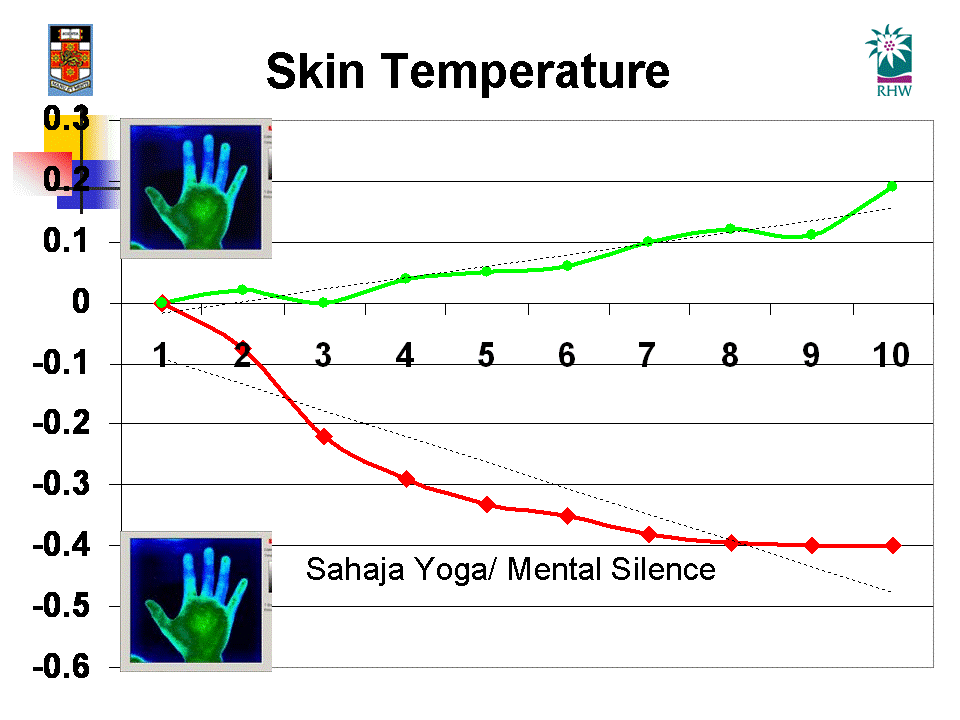
Studies comparing experienced Meditators compared to controls or short-term Meditators have demonstrated physiological changes during Meditation suggestive of a wakeful hypometabolic state that is characterised by decreased sympathetic nervous activity, important for fight and flight mechanisms, and increased parasympathetic activity, important for relaxation and rest. This wakeful hypometabolic state with parasympathetic dominance has been shown to be qualitatively and quantitatively different from simple rest or sleep..
Sahaja Yoga Meditation, for example, a technique that evokes thoughtless awareness on a daily basis, presumably via activation of parasympathetic-limbic pathways, has been shown to reduce autonomic activity in short and long-term practitioners compared to controls.
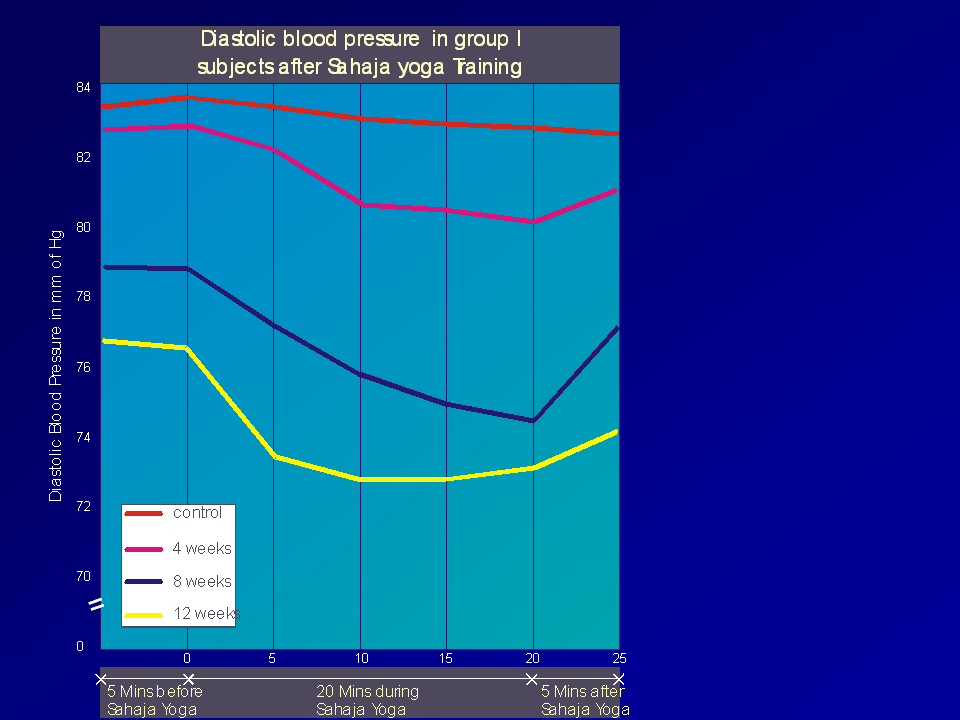
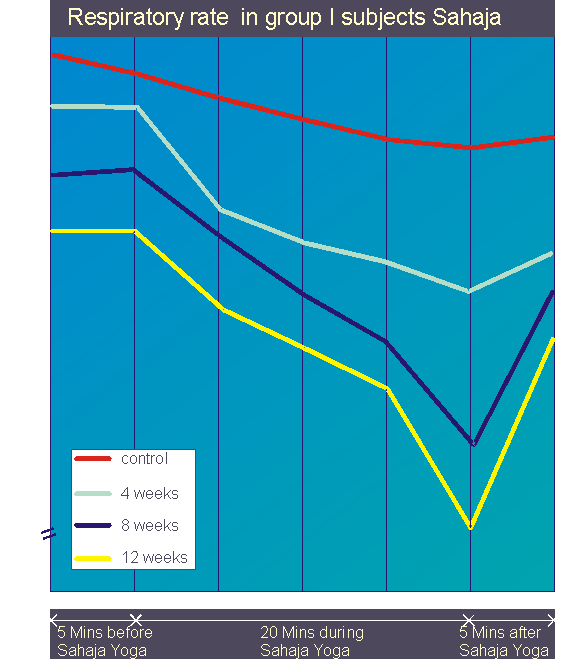
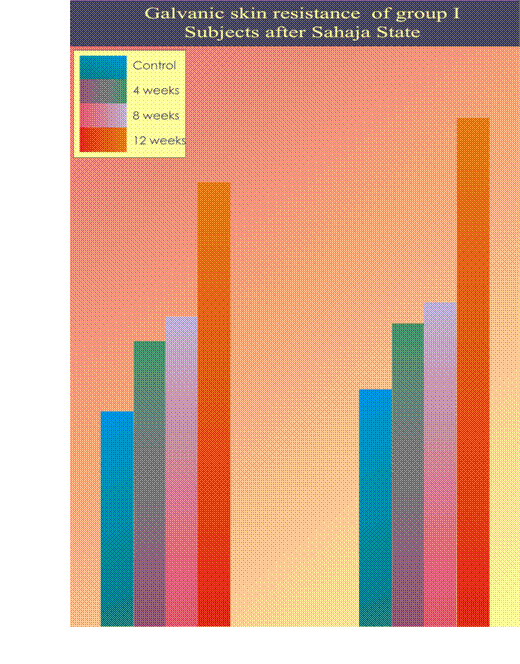
A series of studies conducted by Prof Rai from the Department of Physiology of the University of Delhi have shown that Sahaja Yoga Meditation when compared to a Sham meditation elicits a reduction in stress-related physiological parameters than indicate an increase of the parasympathetic nervous system, important for rest and relaxation. This included a reduction in heart, respiratory and pulse rates, of systolic blood pressure, and oxygen metabolism, and of urinary vanilly-mandelic acid (VMA) and increases o skin resistance.
These physiological alterations are indicators of deep parasympathetic activation and therefore physiological relaxation that have been related to stress relief and may have a role in the prevention of stress-related illness, such as respiratory, hypertensive of cardiovascular disease.
In fact, the same physiological effects achieved with Sahaja Yoga Meditation in healthy individuals, could also be achieved in patients with epilepsy and with asthma and hypertension after 4 weeks of Meditation training, which furthermore were related to the significant reduction of asthma/epilepsy attacks.
BODY EFFECTS
Effects of Sahajayoga on Brain Chesmistry :
There is evidence that meditation experiences are related to limbic brain activation.
Several studies have shown changes in neurochemicals that are released by limbic brain regions and mediate positive emotions.
For example, a study conducted by Prof Ram Mishra at the McMaster's University, in Toronto, showed that Sahaja Yoga Meditation compared to rest elicited a significant increase of 70% in beta-endorphins as measured in the blood in males.
Beta-endorphins are neuro-hormones, endogenous opioids that are released from the pituitary gland in the hypothalamus and have been associated to feelings of positive affect such as happiness and euphoria.
They are also released during high performance sports and when people are in love.
They are thought to play an important role in homeostatic mechanisms, pain reduction and may even affect the immune system.
A strengthening of the immune system through meditation could explain why some people improve in severe illnesses such as cancer with Meditation .
Mishra R, Barlas C, Barone D. (1993): Plasma beta endorphin levels in humans: effect of Sahaja Yoga. Paper presented at the "Medical Aspects of Sahaja Yoga", Medical conference, held in New Delhi India, 1993.

Effects of Sahajayoga meditation on Personality :
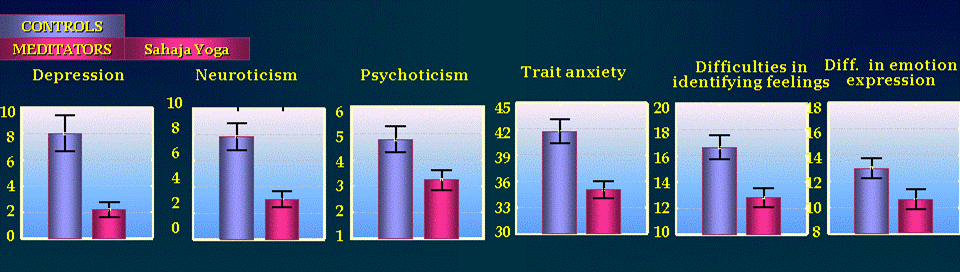
A study published in the International Journal of Neuroscience compared 25 meditators of Sahaja Yoga to a group of 25 comparison subjects who did not practice Meditation on a range of trait personality measures.
The long-term Meditators scored significantly lower in personality features of anxiety, neuroticism, psychoticism, and depression and scored higher in emotion recognition and expression.
This suggests that long-term Meditation practice leads to higher psycho-emotional stability and better emotional skills.
Aftanas L, Golosheykin S. (2005): Impact of regular meditation practice on EEG activity at rest and during evoked negative emotions. International Journal of Neuroscience 115(6):893-909.
Reference :
Reference :
Effects of Sahajayoga Meditation on epilepsy
One of the most consistent findings in the Meditation literature is the effectiveness of Sahaja Yoga Meditation in Epilepsy.
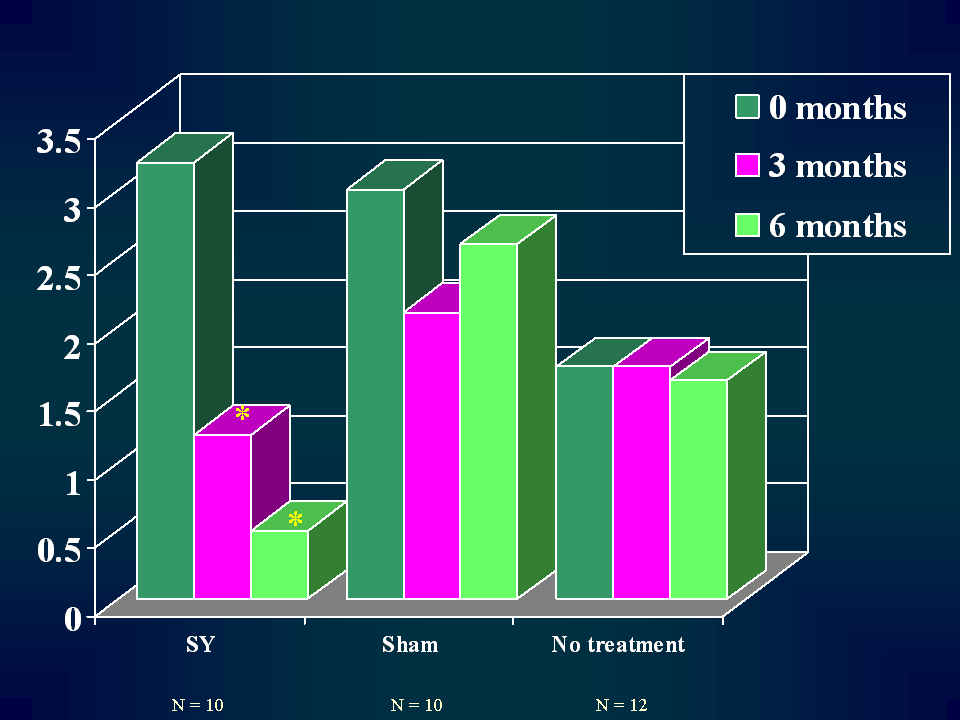
A series of studies have shown significant reductions of the number of seizures in patients with epilepsy of up to 86% after 6 months of treatment with Sahaja Yoga Meditation compared to sham Meditation.
Sahaja Yoga elicited a reduction in seizures of 65% after 3 months and of 86% after 6 months. The sham meditation condition or non-treatment lead to no significant changes over 6 months.
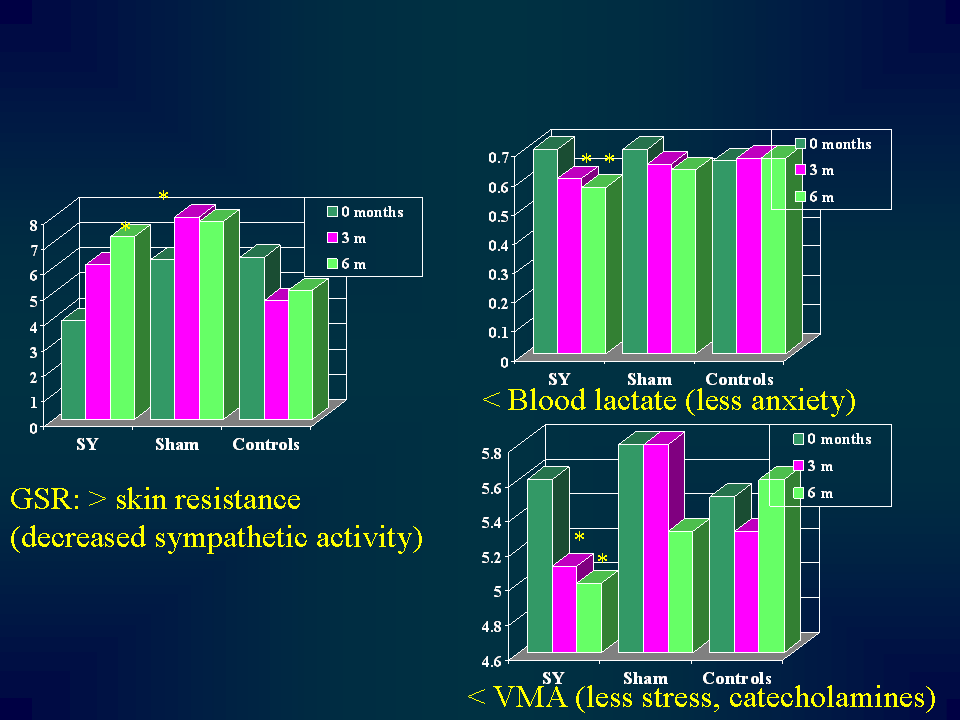
In addition, there was also a reduction of stress-related physiological indicators only in those patients treated with Sahaja Yoga meditation.
An increase in skin resistance indicating decreased sympathetic activity (more relaxation).
An reduction in in blood lactate indicating less anxiety.
An reduction in vanillil mandelic acid (VMA), indicating reduced stress levels.
The authors argue that the reduction in stress following Sahaja Yoga practice may be responsible for the clinical improvement of their epilepsy.
Gupta H, Dudani U, Singh SH, Surange SG, Selvamurthy W. (1991): Sahaja Yoga in the management of intractable epileptics. Journal of Association of Physicians of India 39(8):649.
Panjwani U, Gupta H, Singh SH, Selvamurthy W, Rai UC. (1995): Effect of Sahaja Yoga practice on stress management in patients of epilepsy. Indian Journal of Physiology and Pharmacology 39:111-116.
Panjwani U, Selvamurthy W, Singh SH, Gupta HL, Mukhopadhyay S, Thakur L. (2000): Effect of Sahaja yoga meditation on Auditory Evoked Potentials (AEP) and Visual Contrast Sensitivity (VCS) in epileptics. Applied Psychophysiology and Biofeedback 25(1):1-12.
Panjwani U, Selvamurthy W, Singh SH, Gupta HL, Thakur L, Rai UC. (1996): Effect of Sahaja yoga practice on seizure control and EEG changes in patients of epilepsy. Indian Journal of Medical Research 103:165-172.
Yardi N. (2001): Yoga for control of epilepsy. Seizure-European Journal of Epilepsy 10(1):7-12.
Reference :
Effects of Sahajayoga meditation on Asthama :
Given the effects of Mediation on reducing sympathetic activity and respiratory rates, several studies have investigated whether meditation would have an effect on respiratory diseases.
A study conducted at the NaturalTherapies Unit of the Royal Hospital for women, in Sydney, Australia, showed a significant beneficial effect of Sahaja Yoga on Asthma patients who were resistent to steroids (Manocha et al., 2000).
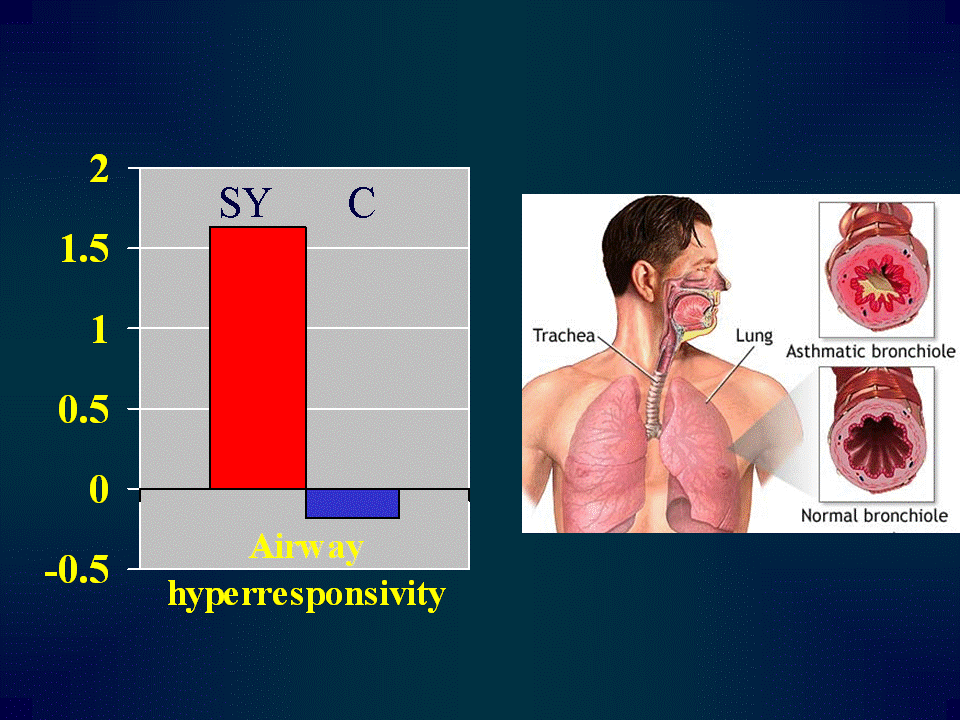
47 patients with severe asthma were randomly allocated to two groups: one group received Sahaja Yoga Meditation treatment (21 patients), the other group received general relaxation treatment (26 patients), both conducted over 4 months and involving a 2 hour session.
The Sahaja Yoga Meditation group showed a significant reduction in the severity of asthma as measured in airway-hyper-responsivity in response to chemical challenge (an objective indicator of the severity of asthma) compared to the control group who received relaxation.
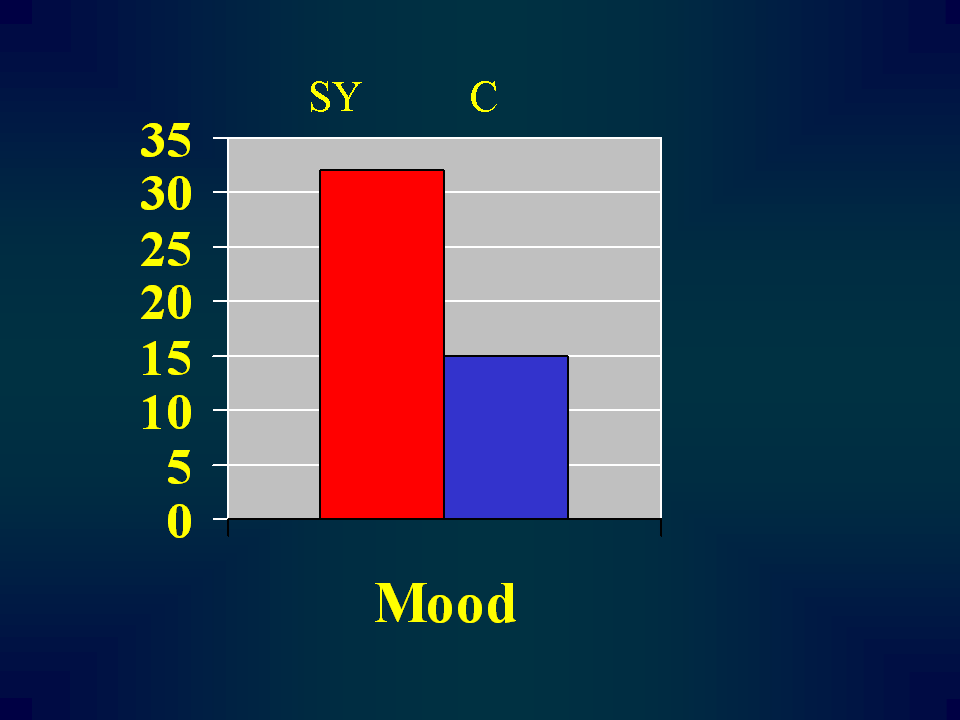
Addition there was an increase in the subjective ratings of mood.
Similar findings were observed previously in a smaller trial using the same meditation technique (Chugh et al., 1997).
References
Chugh D. (1997): The effects of Sahaja Yoga in bronchial asthma and essential hypertension. New Delhi Medicos 13(5):46-47.
Manocha R, Marks GB, Kennhington P, Peters D, Salome CM. (2002): Sahaia yoga in the management of moderate to severe asthma: a randomised controlled trial. Thorax 57(2):110-115.
Effects of Sahajayoga meditation on Menopause :
A study conducted at the Sydney Menopause Centre, Royal Hospital for Women, Australia, showed that Sahaja Yoga Meditation is effective as treatment for menopausal symptoms.
Sahaja Yoga Meditation was taught for 8 weeks, twice-weekly, in 10 women with menopausal symptoms instead of the more traditional treatment of hormone replacement therapy for the management of menopausal hot flushes.
The average improvement after Sahaja Yoga Meditaton training was similar to that expected from hormone replacement therapy and similar or better than that of other behavioural treatments such as cognitive behavioural therapy.
Improvements were observed in the frequency of hot flushes, which were reduced to 67% below the baseline frequency rate. At follow up, it was still 57% below baseline (a reduction in hot flashes frequency of 50% is considered an improvement).
Significant improvements also occurred in a Climacteric Scale, the Menopause Quality of Life Questionnaire, and both State and Trait Anxiety subscales.
A study conducted at the Sydney Menopause Centre, Royal Hospital for Women, Australia, showed that Sahaja Yoga Meditation is effective as treatment for menopausal symptoms.
Sahaja Yoga Meditation was taught for 8 weeks, twice-weekly, in 10 women with menopausal symptoms instead of the more traditional treatment of hormone replacement therapy for the management of menopausal hot flushes.
The average improvement after Sahaja Yoga Meditaton training was similar to that expected from hormone replacement therapy and similar or better than that of other behavioural treatments such as cognitive behavioural therapy.
Improvements were observed in the frequency of hot flushes, which were reduced to 67% below the baseline frequency rate. At follow up, it was still 57% below baseline (a reduction in hot flashes frequency of 50% is considered an improvement).
Significant improvements also occurred in a Climacteric Scale, the Menopause Quality of Life Questionnaire, and both State and Trait Anxiety subscales.
Meditation is an attractive option for women with menopausal symptoms because they prefer non-pharmacological treatments, thereby avoiding the risks and side effects of hormone replacement therapy.
Manocha, M, Semmar B (2007) A Preliminary Study of Efficacy and Safety of Sahaja Yoga Meditation as a Treatment for Hot Flushes and Other Symptoms of the Perimenopause. Journal of Clinical Psychology in Medical Settings, 14, 266-273.
Reference :


